
Types of RV Explained: Class A, B, C, Travel Trailers, and Fifth Wheels
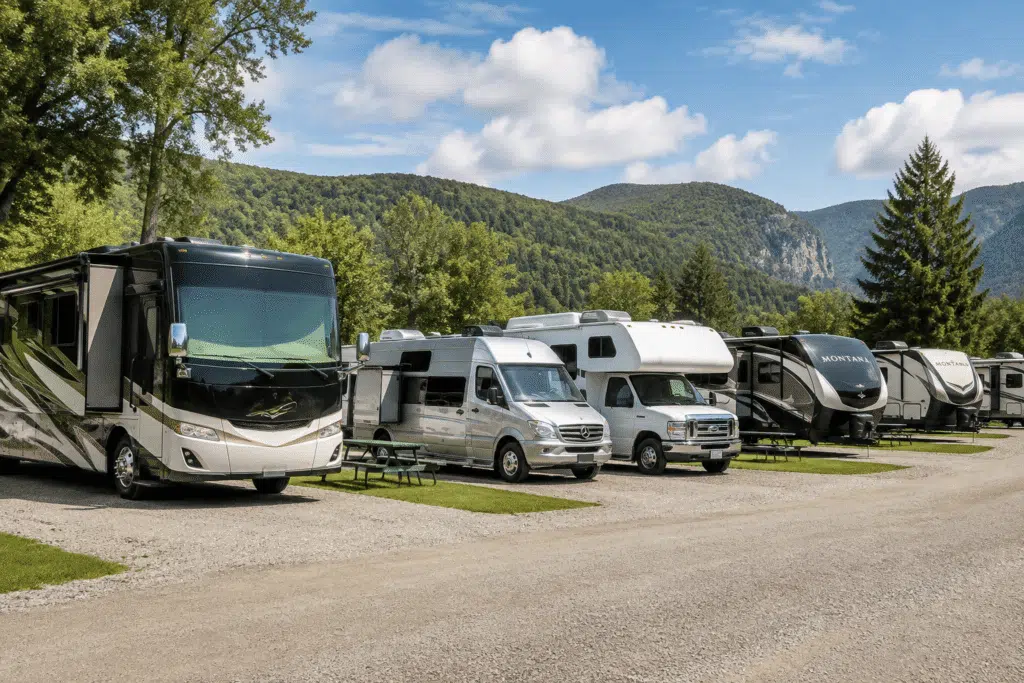
Walk through an RV campground, and you’ll quickly realize just how different one RV can look from the next. You might see a huge motorhome with multiple slide-outs parked beside a compact camper van, while the next site has a travel trailer hitched to a pickup truck.
They’re all RVs, but they’re designed for very different ways of camping.
Understanding the different types of RV can make it much easier to figure out what actually fits your plans. Maybe you want something small enough to drive through a busy town without stressing about parking. Maybe you need enough beds for the whole family. Or perhaps you’re planning longer stays and want plenty of living space, storage, and a full kitchen.
The biggest decision usually starts with whether you want to drive your RV or tow it. From there, you can compare Class A, Class B, and Class C motorhomes with travel trailers, fifth wheels, and several smaller options.
This RV guide breaks down what each type is like to own and travel with, along with the advantages and tradeoffs you should know before buying or renting one.
First, What Counts as an RV?
RV stands for recreational vehicle, but the term covers much more than the large motorhomes you may picture first.
Some RVs have their own engines. You get behind the wheel and drive them directly to the campground. Class A, Class B, and Class C motorhomes all fall into this category.
Others need to be towed. Travel trailers and fifth wheels are two of the most common examples, but you’ll also find pop-up campers, teardrop trailers, and other smaller towable options.
Neither style is automatically better.
A motorhome keeps your driving and living space together, which can be convenient when you’re moving frequently. A towable RV lets you unhitch at the campground and use your truck or other tow vehicle for grocery runs, sightseeing, and day trips.
Think about how you picture your days once you arrive. If you want to set up camp and leave the RV behind while you explore, a towable may be appealing. If you’re planning a road trip with frequent stops and want everything with you as you travel, a motorhome may feel easier.
And if you’re still figuring out what kind of camping experience you want, learning how to find a campground can also help you think through the destinations, campsite sizes, and amenities that matter to you.
The Main Types of RVs at a Glance
Before getting into each option, here’s a quick look at how the most common types of RVs compare.
| RV Type | Motorized or Towable? | What Stands Out | Often Works Well For |
| Class A | Motorized | Large living space and plenty of amenities | Longer trips, families, and extended stays |
| Class B | Motorized | Compact camper van that’s easier to maneuver | Couples, solo trips, and frequent road trips |
| Class C | Motorized | Mid-sized motorhome, often with an over-cab sleeping area | Families and campers wanting a balance of space and drivability |
| Travel Trailer | Towable | Huge variety of sizes, layouts, and price points | Weekend trips, families, and campers who already have a suitable tow vehicle |
| Fifth Wheel | Towable | Spacious interior with a special hitch mounted in a pickup bed | Longer stays and campers who want more living space |
| Pop-Up Camper | Towable | Folds down for towing and expands at camp | Beginners and campers moving up from tent camping |
| Teardrop Trailer | Towable | Small, lightweight, and simple | Couples and solo campers |
| Truck Camper | Carried by pickup | Fits into the bed of a compatible pickup truck | Smaller setups and trips where maneuverability matters |
| Toy Hauler | Usually towable, though motorized versions exist | Garage space for motorcycles, ATVs, and other equipment | Campers bringing recreational gear |
You don’t need to memorize all of these before your first trip. For most people comparing RVs, Class A, Class B, Class C, travel trailers, and fifth wheels are the main categories worth understanding first.
Class A Motorhomes: The Big, Spacious Option
A Class A is probably what comes to mind when someone says “motorhome.”
These are the large, bus-like RVs you often see cruising down the interstate. The driver’s area and living space are part of the same vehicle, and many models have slide-outs that expand the interior once you’re parked.
Inside, a Class A can feel surprisingly close to a small apartment. Depending on the model, you may have a full kitchen, bathroom, separate bedroom, dining area, entertainment space, and plenty of storage.
That makes them appealing when you’re planning to spend a lot of time on the road or stay at campgrounds for weeks at a time.
What You’ll Like About a Class A
Space is the obvious advantage.
You can bring more belongings, spread out when you’re parked, and have enough room for several people without constantly rearranging the interior. Larger holding tanks and generous storage can also make longer stays easier.
Another benefit is having your living space accessible when you stop during a travel day. There’s no separate trailer to enter once you’re safely parked.
What You’ll Need to Consider
Size can also be the biggest drawback.
Driving a large Class A takes some getting used to, particularly on narrow roads, in busy towns, and when backing into campsites. You’ll need to pay close attention to the RV’s height and length when planning routes and choosing places to stay.
Fuel, maintenance, insurance, and storage can also cost considerably more than they would with a smaller RV.
Campground selection matters as well. Before making a reservation, confirm that the site can handle your RV’s total length and any slide-outs you plan to use.
A Class A can be a great fit if you value space and comfort and don’t mind handling a larger vehicle. If your dream trip involves traveling the US in an RV for weeks or months at a time, that extra living room can become much more valuable than it would be on an occasional weekend getaway.
Class B Motorhomes: Small Enough to Keep Things Simple
Class B motorhomes, often called camper vans, are the smallest of the three main motorized RV classes. They’re built on a van chassis and pack sleeping space, storage, and basic living amenities into a much smaller footprint than a Class A or Class C.
That compact size is a big part of the appeal.
A Class B is easier to drive through cities, fit into smaller campsites, and park when you stop for groceries or sightseeing. For solo travelers and couples, it can feel like a good balance between having the comforts of an RV and keeping the trip easy to manage.
What You’ll Like About a Class B
Maneuverability is the biggest advantage.
You can usually take a Class B places that would feel stressful in a larger motorhome. Narrow roads, tighter campground loops, and regular parking lots are generally much easier to handle.
Class B RVs are also a good fit for frequent road trips because you don’t need a separate tow vehicle. Your transportation and living space travel together, which makes quick overnight stops and spontaneous detours easier.
For anyone who wants to explore RV resort listings but doesn’t want to plan every trip around oversized sites, a Class B gives you more flexibility when choosing where to stay.
What You’ll Need to Consider
Space is limited.
Storage can fill up quickly, kitchens are smaller, and bathrooms may be compact. Some layouts require you to convert seating into a bed each night, and you won’t have the same separation between sleeping, cooking, and living areas that you’d find in a larger RV.
There’s also another tradeoff that becomes obvious once you’re at the campground: if you want to leave for dinner, groceries, or sightseeing, you’re taking your entire campsite with you.
That may not bother you on a road trip where you’re constantly moving, but it can feel less convenient during a longer stay.
Class C Motorhomes: A Middle Ground for Families and Road Trips
Class C motorhomes sit between Class A and Class B in both size and feel. They’re usually easy to recognize by the sleeping or storage area that extends over the cab.
For many families, this middle ground is exactly what makes a Class C appealing.
You get more interior space than a camper van without stepping all the way up to the size of a large Class A. Depending on the floor plan, you may have a separate bedroom, full bathroom, kitchen, dinette, and enough sleeping space for several people.
What You’ll Like About a Class C
Class C motorhomes tend to offer a good balance between comfort and drivability.
They’re generally easier to maneuver than a large Class A while still giving you more room to spread out than a Class B. The over-cab sleeping area can also be useful for families because it adds another bed without taking up the main living space.
For weekend trips, family vacations, and longer road trips, that balance can make a Class C one of the most versatile types of RV.
What You’ll Need to Consider
A Class C is still a fairly large vehicle.
You’ll need to pay attention to campsite length, turning room, and overhead clearance, and you may not want to drive it through every downtown area or narrow mountain road.
Like a Class B, your transportation is tied to your living space unless you’re towing another vehicle. That means day trips from the campground may require packing up more than they would with a travel trailer or fifth wheel.
Still, if you want more room than a camper van but aren’t ready for a full-size Class A, a Class C often hits a comfortable middle ground.
Class A vs. Class B vs. Class C RV: What’s the Difference?
The easiest way to think about Class A vs Class B vs Class C RV is to compare space, maneuverability, and how you plan to use the RV.
- A Class A gives you the most room and usually the most amenities, but it also asks the most from you in terms of driving, fuel, campsite size, and maintenance.
- A Class B is the easiest to maneuver and works especially well for couples or solo travelers, but you’ll give up interior space and storage.
- A Class C lands in the middle. You get more sleeping and living space than a Class B without taking on the full size of many Class A motorhomes.
There isn’t one class that’s automatically better than the others. The right choice depends on how many people you’re bringing, how often you’ll move between campgrounds, and how comfortable you are driving a larger rig.
Travel Trailers: Lots of Choices Without an Engine
Travel trailers are one of the broadest RV categories, which is part of what makes them so popular. They range from compact trailers with just enough room for two people to large models with separate bedrooms, bunkhouses, full kitchens, and multiple slide-outs.
Unlike a motorhome, a travel trailer doesn’t have its own engine. It connects to a compatible tow vehicle using a hitch at the rear of the vehicle.
Once you reach the campground, you can unhitch the trailer and leave it at your site. Your tow vehicle is then free for grocery runs, sightseeing, trailheads, restaurants, and anything else you want to do during your stay.
What You’ll Like About a Travel Trailer
Choice is one of the biggest advantages.
There are travel trailers for couples who want something small and simple, families who need bunk beds, and campers who want enough space for longer stays. You also have plenty of options when it comes to kitchens, bathrooms, storage, and floor plans.
Not having an engine can make maintenance simpler than owning a motorhome, too. You’ll still need to maintain the trailer’s tires, brakes, roof, plumbing, electrical system, and other components, but there’s no RV engine to service.
Being able to leave your campsite set up is another major benefit. You can spend several days at one campground without having to pack up your living space every time you want to explore the area.
What You’ll Need to Consider
Before shopping for a travel trailer, you need to know what your vehicle can safely tow.
Don’t choose a trailer based only on whether your truck or SUV can physically pull it. You’ll need to consider the manufacturer’s towing capacity, payload limits, hitch setup, loaded trailer weight, and other weight ratings.
The longer the trailer, the more you’ll also need to think about maneuvering. Backing into a campsite takes practice, and wind can be more noticeable when towing on the highway.
You’ll also need to make sure the campgrounds you choose have sites long enough for both your trailer and tow vehicle.
Fifth Wheels: More Room for Longer Stays
A fifth wheel is another towable RV, but it connects to the tow vehicle differently from a travel trailer.
Instead of attaching to a hitch behind the vehicle, a fifth wheel connects to a special hitch mounted in the bed of a compatible pickup truck. Part of the trailer extends over the truck bed, creating the distinctive raised front section you’ll notice on fifth wheels.
That design often translates into a spacious interior with higher ceilings and multiple living areas.
Some fifth wheels have large kitchens, separate bedrooms, multiple bathrooms, fireplaces, washer and dryer hookups, and enough storage to make extended stays feel much more comfortable.
What You’ll Like About a Fifth Wheel
If interior space matters to you, fifth wheels have a lot to offer.
The raised front section is commonly used for a bedroom or additional living space, while slide-outs can make the main part of the RV considerably wider once you’re parked.
They’re especially appealing if you plan to stay in one place for several weeks or months. You can set up the fifth wheel, unhitch your truck, and have a separate vehicle available for the rest of your stay.
A spacious RV can also make destination-style campgrounds more enjoyable because you’re not relying on the campground solely as a place to sleep. For example, a longer stay at Blue Ridge RV Resort can give you a comfortable home base while you spend your days exploring North Georgia.
What You’ll Need to Consider
A fifth wheel requires the right pickup truck and hitch setup.
These RVs can be heavy, so matching the trailer to your truck’s actual towing and payload limits is essential. You’ll also lose some truck-bed storage because that’s where the fifth-wheel hitch sits.
Size is another consideration. Larger fifth wheels may not fit at every campground, and their height requires extra attention to overhead clearance.
If you’re looking at larger models, checking campground site dimensions before booking becomes part of planning every trip.
Travel Trailer vs. Fifth Wheel: Which Makes More Sense?
The travel trailer vs fifth wheel decision often comes down to your tow vehicle, how much interior space you want, and how you plan to camp.
Travel trailers give you more variety. You’ll find everything from lightweight models for shorter trips to large family trailers with several sleeping areas. Depending on the trailer, you may also have more flexibility in the type of vehicle you can use for towing.
Fifth wheels generally lean toward larger setups. They can offer more interior room, higher ceilings, and layouts that feel particularly comfortable during extended stays.
Your truck may settle the question before anything else. A fifth wheel requires a compatible pickup and hitch, while travel trailers can be towed by a wider range of properly equipped vehicles depending on their size and weight.
Where you want to camp matters, too. If you’re interested in larger RVs, take a look at the campground itself before assuming your rig will fit. Site length, road access, turning space, hookups, and parking for your tow vehicle can all affect whether a campground works for you.
When you’re comparing campgrounds near Blue Ridge, GA, for example, checking those details alongside amenities and location can help you find a site that works for both your RV and the kind of trip you’re planning.
A Few Other RV Types You Might Come Across
Class A, B, and C motorhomes, travel trailers, and fifth wheels cover many of the RVs you’ll see at campgrounds, but they’re not your only choices.
If a full-size motorhome or large trailer feels like more than you need, one of these smaller or more specialized RVs may be a better fit.
Pop-Up Campers
A pop-up camper folds down into a compact trailer for travel and expands when you reach the campsite. Many have canvas or fabric-sided sleeping areas that fold out from the main body.
They’re often a nice step between tent camping and a traditional travel trailer. You get a real floor, beds off the ground, and some protection from the weather while still keeping more of that open-air camping feel.
Their smaller size can also make them easier to tow and store than larger trailers. The tradeoff is that setup takes more time, storage is limited, and the fabric sections don’t provide the same insulation or weather protection as a hard-sided RV.
Teardrop Trailers
Teardrop trailers are among the smallest towable RVs.
Most are designed around a simple sleeping area, although larger models may squeeze in additional storage and a few indoor conveniences. Many traditional teardrops have a rear hatch that opens to reveal an outdoor kitchen.
They’re worth considering when you want something more comfortable than a tent without towing a large trailer.
Their compact size makes them easier to maneuver and can open up more campsite choices. Just keep in mind that bathrooms, indoor kitchens, and generous living areas aren’t standard in many smaller models.
Truck Campers
A truck camper sits directly in the bed of a compatible pickup rather than being pulled behind it.
That keeps your overall setup relatively compact and eliminates the need to tow a separate trailer. For campers who like moving frequently or staying at smaller sites, that can be a big advantage.
Space is naturally limited, though. Depending on the model, you’ll have a sleeping area, small kitchen, storage, and possibly a bathroom packed into a fairly tight interior.
You’ll also need to pay close attention to your truck’s payload capacity. Truck campers can be much heavier than they appear, particularly once you’ve added water, propane, gear, and other supplies.
Toy Haulers
Toy haulers are built for people who want to bring more than ordinary camping gear.
The defining feature is a garage area designed to carry things such as motorcycles, ATVs, bikes, or other recreational equipment. A large rear ramp makes loading and unloading easier.
Once you’ve removed the equipment at the campground, that garage can often serve another purpose. Depending on the layout, it might become an extra sleeping area, workspace, dining space, or place to store bulky outdoor gear.
Toy haulers come in different configurations, including travel trailer and fifth-wheel designs, so their size and towing requirements can vary considerably.
They’re a practical option when your camping trips regularly involve equipment that would be difficult to carry with a traditional RV.
Which RV Is Right for You?
After looking at all the different types of RVs, it’s easy to get caught up comparing floor plans, bathrooms, kitchens, slide-outs, and storage compartments.
Start with your trips instead.
Where do you want to go? Who will usually come with you? How long will you stay? Will you move every couple of days or settle into one campground for several weeks?
Those questions can narrow your choices surprisingly quickly.
For Solo Trips or Couples
A Class B, teardrop trailer, truck camper, or smaller travel trailer may give you everything you need without adding unnecessary space.
Smaller rigs are generally easier to maneuver and can give you more flexibility when choosing campsites. They’re also worth considering if most of your time will be spent hiking, sightseeing, fishing, or otherwise away from the RV.
You may not need a huge living room when you’re only using the RV for meals, showers, and sleep.
For Families
A Class C or travel trailer can be a practical place to start.
Both are available with layouts designed around multiple sleeping areas, and many travel trailers offer bunkhouse floor plans that give kids their own space.
Larger families may prefer a Class A or fifth wheel when having more room to spread out matters more than keeping the RV compact.
Don’t look at sleeping capacity alone. Think about where everyone’s clothes will go, whether there’s enough room around the table, and what the interior will feel like when everyone is inside during a rainy afternoon.
For Long Road Trips
If you’re planning on traveling the US in an RV, think carefully about how often you’ll move.
A Class B keeps travel simple when you’re changing locations frequently and don’t need much interior space. Class C motorhomes give you more room while keeping your driving and living areas together.
Travel trailers and fifth wheels work differently. You’ll have more setup when arriving and leaving, but once you’re parked, you can unhitch and use your tow vehicle to explore without moving your home every time.
There’s no single best road-trip RV. The better choice is the one that makes the way you like to travel easier.
For Longer Campground Stays
If you’re planning to stay several weeks or even months in one place, interior space starts to matter more.
A fifth wheel or larger travel trailer gives you the advantage of leaving your RV set up while using your tow vehicle for everyday trips. Larger Class A motorhomes can also provide the storage, kitchen space, and living areas that make an extended stay more comfortable.
This is also where campground amenities become more important. Full hookups, laundry facilities, Wi-Fi, larger sites, and easy access to groceries can matter much more after a month than they do during a two-night weekend.
For Campers Who Want to Stay Flexible
Smaller RVs give you options.
A Class B, truck camper, teardrop, or compact travel trailer can be easier to fit into smaller campsites and manage on the road. You may also feel more comfortable exploring destinations where maneuvering a 40-foot motorhome would be difficult.
That flexibility can be especially useful when your trips mix campgrounds with cities and sightseeing. If you’re exploring campgrounds throughout California, for example, a smaller rig can make it easier to move between coastal communities, inland destinations, and stops near larger cities without every campground decision revolving around whether your RV will fit.
Think About Where You Want to Camp, Too
The RV itself is only half of the decision. You also need to think about where you’ll actually take it.
A large Class A or fifth wheel may give you plenty of room once you’re parked, but you’ll need campsites that can comfortably accommodate the length and height of your rig. A Class B, truck camper, or smaller travel trailer can give you more options when you’re interested in tighter campsites or destinations where roads are more difficult to navigate.
Before booking, check the site’s length, hookup options, road access, and any restrictions that could affect your RV. Knowing how to find a campground that fits your rig can save you from discovering these problems after you arrive.
For larger RVs, amenities such as full hookups and big-rig access may move higher on your list. Blue Ridge RV Resort in North Georgia, for example, offers full-hookup sites and accommodates big rigs, making it an option to consider when you’re bringing a larger motorhome or towable.
On a coastal road trip, you may have different priorities. Harbor Village RV Park and Pillar Point RV Park in Half Moon Bay can put you close to the California coast. You can also compare more campgrounds near San Francisco, CA if that area is part of your route.
The RV that works best for you should fit both the way you want to live at camp and the places you actually want to visit.
What to Check Before Buying or Renting an RV
Once you’ve narrowed down the types of RV that interest you, don’t make your decision based on the floor plan alone. An RV can look perfect when it’s parked at a dealership and feel very different once you’re loading it for a trip.
How Much Space Do You Really Need?
Start with the number of people who will regularly use the RV.
Don’t rely only on the advertised sleeping capacity. A dinette that converts into a bed may technically sleep two people, but that doesn’t necessarily mean two adults will want to sleep there every night for a week.
Walk through the RV and picture a normal day. Where will everyone sit? Where will you store clothes? Can two people move through the kitchen at the same time? What happens when everyone is inside because it’s raining?
A little extra room can be valuable, but buying far more RV than you need means you’ll also be driving, towing, maintaining, and paying for that extra space.
Make Sure You Can Safely Tow It
If you’re considering a travel trailer, fifth wheel, or another towable, check your vehicle’s limits before falling in love with a particular RV.
Towing capacity is only part of the equation. Payload, hitch weight, axle ratings, and the weight of passengers and gear can all affect whether your setup is safe.
Use the specifications for your actual vehicle and trailer rather than assuming that a certain truck can tow every RV in a particular category.
Think About Driving and Parking
A beautiful RV isn’t much fun if you’re nervous every time you have to move it.
Think realistically about what you’re comfortable driving or towing. A Class B will generally feel much closer to driving a regular vehicle than a large Class A. A small travel trailer will also handle very differently from a long fifth wheel.
You can learn to manage a larger rig with practice, but you don’t have to choose the biggest RV your budget allows.
Look Beyond the Purchase Price
Your budget should include more than what you pay to bring the RV home.
Insurance, fuel, maintenance, tires, repairs, campground fees, propane, and storage can all become part of the cost of RV ownership. Motorhomes also have engines and drivetrains to maintain, while towable RVs require a capable tow vehicle.
If you’re unsure which size makes sense, renting a few different RVs before buying can be money well spent.
Consider How Often You’ll Actually Use It
A large fifth wheel can be wonderful when you’re spending months at a campground, but it may be more RV than you need for four weekends a year.
The opposite can happen with a tiny camper. It may feel perfect during a dealership walkthrough but cramped once you’re spending several weeks on the road.
Try to buy or rent for the trips you’ll realistically take rather than the trips you imagine you might take someday.
Frequently Asked Questions
What are the main types of RV?
The main types of RV include Class A, Class B, and Class C motorhomes, along with towable options such as travel trailers and fifth wheels. You’ll also find smaller or more specialized choices, including pop-up campers, teardrop trailers, truck campers, and toy haulers.
What’s the difference between Class A, Class B, and Class C RVs?
Class A motorhomes are generally the largest and offer plenty of living space. Class B RVs are compact camper vans that prioritize maneuverability, while Class C motorhomes fall somewhere between the two and are usually recognizable by the area extending over the cab.
Which type of RV is easiest to drive?
Class B motorhomes are generally among the easiest motorized RVs to drive because of their compact van-based design. Smaller Class C motorhomes can also be approachable for beginners, although any unfamiliar RV takes some practice.
Which RV is best for beginners?
There’s no single best beginner RV. A Class B can work well if you want something easy to maneuver, while a smaller travel trailer may be a good choice if you already own a capable tow vehicle and want to leave your RV at the campground while you explore.
Is a fifth wheel better than a travel trailer?
It depends on how you camp. Fifth wheels often provide more interior space and can be comfortable for longer stays, while travel trailers come in a much wider range of sizes and can work with more types of properly equipped tow vehicles.
Which RV is best for long trips?
Class A and Class C motorhomes, fifth wheels, and larger travel trailers can all work well for long trips when you want more living and storage space. A Class B may be a better fit if you plan to move frequently and value easy driving more than having a large interior.
Find the RV That Fits the Way You Want to Travel
Choosing between all the different types of RVs becomes much easier when you stop looking for the “best” one and start thinking about how you actually want to travel.
A Class B may be perfect if you want to keep moving and explore without worrying as much about the size of your rig. A Class C can give your family more room without moving all the way up to a Class A. Travel trailers offer plenty of choices, while fifth wheels can give you the space and storage that make longer stays feel more comfortable.
Before buying, spend some time inside different RVs and, if possible, rent one for a trip. You’ll learn much more from cooking dinner, making the bed, parking at a campsite, and living in the space for a few days than you will from simply walking through it at a dealership.
Once you know what you’re looking for, you can explore RV resort listings on BlueSpot Guide and compare destinations, campground amenities, and campsite options for your next trip.
The right RV isn’t necessarily the biggest or the one with the longest list of features. It’s the one that gives you enough comfort for the trip you want without making getting there harder than it needs to be.