
Camping in the Rain: RV Setup, Safety, and Activity Tips
By the BlueSpot Guide Team, compiled from official weather safety resources and practical RV camping guidance.
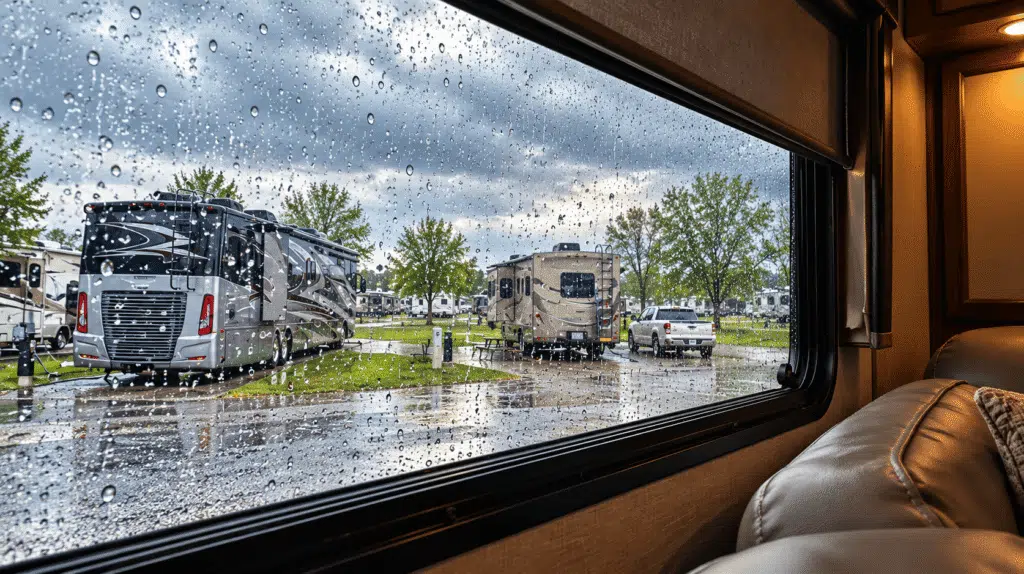
Rain can change your camping plans quickly. A sunny afternoon might turn into a steady downpour, leaving you with muddy campsites, wet outdoor gear, and activities that suddenly need to move indoors. But a little rain doesn’t necessarily mean your camping trip is ruined.
Whether you’re dealing with passing showers or a rainy weekend, camping in the rain can still be comfortable and enjoyable with the right preparation. Knowing how to set up your RV, protect your belongings, recognize unsafe weather conditions, and keep everyone entertained can make a big difference. This guide covers practical tips for camping in rainy weather, from choosing a campsite and managing wet gear to RV safety precautions and family activities.
Is It Safe to Go Camping in the Rain?
Camping in rainy weather can be safe when conditions are mild, your equipment is in good condition, and your campsite isn’t exposed to flooding or other hazards. However, heavy rainfall, thunderstorms, strong winds, and rising water can turn an ordinary camping trip into a dangerous situation. Before leaving, check the forecast for your campground and surrounding area, including the possibility of thunderstorms or flash flooding. The National Weather Service’s flood safety guidance explains why low-lying areas, waterways, and flooded roads require particular caution. If severe weather is expected, postponing your trip or moving to a safer location may be the better choice.
How to Prepare for RV Camping in the Rain
A comfortable rainy camping trip starts before you arrive. Choosing the right campground, packing waterproof essentials, and checking your RV can help you avoid many common problems.
Choose a Campground With Good Drainage
Not every campsite handles rainfall equally well. Low-lying sites may collect standing water, while poorly maintained roads or soft ground can become difficult to navigate after several hours of rain. When deciding what to check before booking an RV park, consider the site’s surface, drainage, road access, and proximity to streams or flood-prone areas. If heavy rain is forecast, contact the campground to ask about current conditions and weather-related restrictions before arriving.
Check Your RV Before Leaving
Inspect your RV’s roof, windows, doors, and exterior seals for visible damage or signs of water intrusion. Make sure roof vents close properly, storage compartments are protected from moisture, and your windshield wipers, tires, lights, and brakes are in good condition. If you’re expecting extended rainfall, check your heating and ventilation systems as well. Discovering a leaking window or faulty wiper before departure is much easier than dealing with it during a storm.
Pack Waterproof Camping Essentials
Keeping important items dry is easier when you prepare for rain before leaving home. Waterproof jackets, extra footwear, absorbent towels, and sealed storage containers can make rainy conditions much more manageable. Use this quick checklist alongside your regular RV camping packing list.
| Item | Why It’s Useful |
| Waterproof jackets or rain ponchos | Keeps campers dry during outdoor activities |
| Waterproof shoes or rain boots | Helps with wet grass, puddles, and muddy paths |
| Extra towels and microfiber cloths | Dries surfaces, shoes, and equipment |
| Waterproof storage bins or dry bags | Protects clothing, electronics, and supplies |
| Outdoor entry mat | Reduces mud and water tracked into the RV |
| Extra socks and dry clothing | Makes changing after outdoor activities easier |
| Flashlights and charged power banks | Provides backup lighting during outages |
| Indoor games, books, and craft supplies | Keeps everyone entertained during extended rain |
If you’re traveling with children, a family camping checklist can help you organize extra clothing, personal essentials, and activities for changing weather.
Setting Up Your RV Campsite in the Rain
Arriving at a wet campground requires a slightly different approach than setting up in dry weather. The goal is to position your RV safely, reduce mud around the entrance, and protect your equipment without creating new hazards.
Park on Stable, Well-Drained Ground
Choose a designated campsite with firm ground and avoid areas where water is pooling or flowing. Even a relatively level site can become problematic if rainfall softens the surface or causes water to collect around the tires and stabilizers. Follow the campground’s parking instructions and use leveling equipment appropriate for your RV and site conditions, avoiding unstable ground that could shift as the soil becomes saturated.
Create a Dry Entry Area
A waterproof entry mat can help keep mud and moisture from being tracked into your RV. Set aside a small area near the entrance for wet shoes, rain jackets, and towels so the rest of your living space stays dry. If conditions permit, an awning can provide temporary shelter, but retract it when strong winds, thunderstorms, or conditions beyond the manufacturer’s limits are expected. A few practical campground setup ideas can also help you organize an outdoor space that stays functional when the weather changes.
Protect Electrical Connections and Outdoor Equipment
Use properly rated RV electrical equipment and keep plugs, adapters, and connections away from standing water. Never handle electrical connections while standing in water or use damaged cords. Secure outdoor furniture, cooking equipment, and loose belongings when rain or wind is expected, and store items that aren’t designed for prolonged moisture exposure. If you notice damaged electrical equipment or unsafe connections, stop using them until they can be inspected.
Manage Water and Mud Around the RV
Keep an absorbent towel near the entrance to wipe up water before it spreads across the floor. Store muddy shoes in a designated container, dry wet gear promptly, and check door seals for leaks after heavy rain. These small habits can help keep the interior clean without adding much work to your daily routine, especially when people are frequently moving between the RV and the campsite.
RV Camping Safety Tips for Rainy Weather
Rainy weather calls for extra caution, particularly when thunderstorms, flooding, or strong winds are possible. Knowing when to stay indoors, change your plans, or leave the campground is just as important as keeping your equipment dry.
Watch for Thunderstorms and Lightning
If you hear thunder, stop outdoor activities and seek shelter in a substantial building or an enclosed, metal-topped vehicle with the windows closed. Not all RVs provide reliable lightning protection, especially those with fiberglass bodies or pop-up sections, so a substantial building is generally the safer option. According to the National Weather Service’s lightning safety recommendations, you should remain in safe shelter for at least 30 minutes after the last thunder. Avoid standing beneath trees, using outdoor electrical equipment, or remaining under an RV awning during thunderstorms.
Avoid Flooded Roads and Low-Lying Areas
Heavy rain can cause water levels to rise quickly, particularly near rivers, creeks, and low-lying campsites. Never attempt to drive your RV through flooded roads, even if the water appears shallow. Floodwater can conceal damaged pavement, debris, and unexpectedly strong currents. If water begins rising around your campsite, follow campground instructions and move to higher ground before conditions become dangerous. The Ready.gov flood safety guide provides additional information about preparing for floods and responding to evacuation warnings.
Be Careful on Wet Trails and Campground Roads
Wet pavement, muddy trails, and slippery wooden surfaces can increase the risk of falls. Wear footwear with reliable traction, avoid steep or unstable trails, and keep children away from swollen streams and drainage areas. When driving through a campground, reduce your speed and watch for pedestrians, standing water, and softened ground. If visibility becomes poor or the weather turns severe, wait until conditions improve before continuing your trip.
Know When to Change Your Plans
Light rain may only require a change of activities, but severe thunderstorms, flash flood warnings, damaging winds, or unsafe road conditions can justify postponing travel or leaving a campsite. Follow official weather alerts and campground instructions rather than relying only on what the sky looks like. A safe indoor activity or a change in your itinerary is always preferable to staying outdoors during dangerous weather.
Rainy Day Camping Activities for Families and Adults
A rainy forecast doesn’t mean spending the entire day waiting for the weather to improve. With a few indoor supplies and flexible plans, you can still enjoy time together while staying dry.
Play Board Games and Card Games
Board games, playing cards, and travel-sized games are easy to store in an RV and work well when outdoor plans are interrupted. Try Uno, Go Fish, a travel-sized board game, or a simple trivia competition that everyone can join. If you’re camping with younger children, matching games, puzzles, and cooperative games can keep them entertained without requiring much table space.
Try Camping Crafts and Creative Activities
Coloring, drawing, journaling, and small craft projects are useful rainy day camping activities, especially for children. Try making a camping journal, drawing a map of the campground, or creating a nature scavenger hunt for when the weather improves. Keep supplies in a compact container so they’re easy to bring out when needed. You can also explore more camping ideas for kids that can be adapted to your campsite and available space.
Cook a Simple Meal Together
Rainy afternoons can be a good opportunity to prepare a favorite meal or try something simple together. Quesadillas, grilled cheese sandwiches, soup, or a quick pasta dish are practical options when you’re working with limited counter space. Choose recipes that require minimal preparation and cleanup, and always use your RV’s cooking equipment according to the manufacturer’s instructions. Never bring outdoor grills or fuel-burning camp stoves inside.
Read, Watch a Movie, or Listen to Music
Sometimes the best rainy camping activity is a quiet one. Bring a book, download a movie before your trip, or create a playlist for a relaxing afternoon. You could even turn the evening into a small family movie night with snacks and blankets. If you’re traveling with others, let everyone take turns choosing an activity so the day feels less like waiting for the rain to stop.
Explore Indoor Attractions Nearby
If the weather is rainy but road conditions remain safe, look for museums, visitor centers, indoor recreation facilities, or other attractions near your campground. A short outing can provide a change of scenery without requiring an outdoor adventure. Check operating hours and weather-related closures before leaving, especially when storms are affecting the surrounding area.
Things to Do While Camping in the Rain Outdoors
Not every rainy day requires staying inside. During light rain, when there is no thunder, flooding, or other dangerous weather, you may still be able to enjoy outdoor activities with appropriate clothing and footwear.
- Take a short nature walk: Explore designated trails or campground paths that remain open and safe.
- Photograph the scenery: Capture rain-covered leaves, misty landscapes, or reflections in puddles from safe locations.
- Watch wildlife from a distance: Observe birds and other animals without approaching them or entering restricted areas.
- Enjoy a covered seating area: Relax under an approved shelter when conditions are mild and no thunderstorms are nearby.
- Explore the campground: Visit available indoor amenities or sheltered common areas if they’re open.
Choose activities based on actual conditions rather than the forecast alone. If thunder begins, water rises, or trails become unsafe, return to appropriate shelter immediately.
How to Keep Your RV Comfortable During Several Days of Rain
Extended rainfall can make a small RV feel crowded, particularly when everyone is spending more time indoors. A few adjustments to your daily routine can help keep the living space organized, dry, and comfortable throughout your stay.
Keep Wet and Dry Items Separate
Designate one area for rain jackets, shoes, umbrellas, and other damp belongings. Use washable mats and towels near the entrance, and avoid placing wet items directly on bedding or upholstered furniture. Dry clothing and towels as soon as practical, using campground laundry facilities when available. Keeping a separate bag for dirty or damp items can also make packing up easier when it’s time to leave.
Maintain Airflow and Reduce Condensation
During several days of rain, condensation can collect around windows, walls, and other cool surfaces. Run an appropriate ventilation fan or dehumidifier when needed, and check less visible areas such as storage compartments for dampness. If you notice persistent moisture or musty odors, inspect for possible leaks rather than assuming humidity is the only cause. Addressing small moisture problems early can help prevent larger issues during longer stays.
Make Indoor Space More Functional
Keep frequently used items within easy reach and store unnecessary belongings to reduce clutter. A small folding table, compact games, and organized storage can make it easier to share limited space. Simple comfortable camping tips can also help you organize your sleeping, seating, and storage areas for changing weather.
Choosing a Campground for Rainy Weather
If rain is likely during your trip, campground features can make a noticeable difference in your experience. Well-maintained roads, suitable RV sites, reliable utilities, and accessible indoor facilities can help make a wet weekend more manageable. When comparing properties, consider whether the campground has paved or gravel sites, convenient restrooms, laundry facilities, and reasonable access to nearby indoor attractions. Understanding how to find a suitable campground can help you narrow your options, while a digital campground directory can make it easier to explore different locations.
If you’re planning a trip through the Southeast, you can compare campgrounds in Tennessee, campgrounds in Georgia, or campgrounds in Alabama to find destinations that fit your travel plans. Before booking, contact the property to confirm current site conditions, drainage concerns, and weather-related policies.
Frequently Asked Questions About Camping in the Rain
Is it safe to camp in an RV during rain?
RV camping in the rain can be safe during mild weather when your vehicle is properly maintained and your campsite isn’t exposed to flooding or other hazards. Thunderstorms, strong winds, and rising water require additional precautions.
Should you leave your RV awning out when it rains?
An awning may provide shelter during light rain if its manufacturer permits those conditions, but it should be retracted when strong winds, thunderstorms, or excessive water accumulation are possible.
How do you keep an RV dry while camping in the rain?
Inspect seals and roof vents before traveling, use entry mats, store wet gear separately, and manage indoor humidity with appropriate ventilation. Address any signs of water intrusion promptly.
What are the best rainy day camping activities?
Board games, crafts, reading, cooking, and movies are easy indoor options. If conditions are safe, you can also explore nearby museums or visitor centers.
Can you go hiking while camping in rainy weather?
Light rain doesn’t always prevent hiking, but trail conditions and weather hazards matter. Avoid slippery or flooded trails, and stop outdoor activities immediately when thunder is heard.
What should you pack for camping in the rain?
Pack waterproof clothing, extra socks, suitable footwear, dry bags, towels, entry mats, backup lighting, and indoor entertainment. Keep essential items accessible in case conditions change quickly.
How can you find campgrounds suitable for rainy weather?
Look for properties with stable campsite surfaces, good drainage, maintained roads, and accessible facilities. Contact the campground to confirm current site conditions and any weather-related restrictions.
Make the Most of Your Next Camping Trip, Rain or Shine
Camping in the rain doesn’t have to ruin your plans. With the right RV setup, waterproof supplies, flexible activities, and attention to changing weather conditions, you can stay comfortable while making the most of your time away.
When you’re ready to plan another getaway, BlueSpot Guide can help you compare campground options and discover destinations that fit your travel preferences. You can also contact BlueSpot Guide for additional campground information as you plan your trip.