
Full Hookup vs Dry Camping: What’s the Difference and Which Should You Choose?
Choosing between full hookup vs dry camping can completely change the kind of RV trip you have. Some travelers enjoy the comfort of having water, electricity, and sewer connections ready at their campsite, while others prefer quieter stays that feel more remote and closer to nature.
Neither option is automatically better. The right choice usually depends on your travel style, comfort level, and the kind of experience you want from the trip.
For some RVers, relaxing at a full-service campground after a long drive feels like the perfect reset. Others enjoy the slower pace of waking up in a quiet area without crowded campground rows or constant activity nearby. Understanding both options makes it easier to choose the setup that actually fits your trip instead of booking blindly.
Full Hookup Camping and Why Many RV Travelers Prefer It

Photo from The Hilltop at Brenham
Full hookup camping means your RV site includes water, electricity, and sewer connections directly at the campsite. These are often called full hookup RV sites, and they are especially popular with beginners, families, and long-term travelers.
Having utilities already connected makes daily RV life much easier. Travelers can shower, cook, charge devices, and run appliances without worrying as much about conserving resources.
That added convenience often creates a more relaxed trip, especially after long driving days. Even simple comforts like air conditioning during hot afternoons or a warm shower at night can make outdoor travel feel far less stressful.
Many travelers looking into campground amenities for RVers choose full hookups because they want comfort combined with outdoor access.
Dry Camping Meaning and What the Experience Feels Like
The basic dry camping meaning refers to RV camping without water, sewer, or electrical hookups. Some travelers also refer to this as RV camping without hookups.
Dry camping often takes place in more remote areas, public lands, or campgrounds with fewer built-in services. The experience usually feels quieter and more nature-focused compared to larger RV resorts.
Instead of relying on campground utilities, travelers use onboard RV tanks, batteries, generators, or solar power. That setup requires more preparation, but many RVers enjoy the added independence.
Early mornings in remote locations, quieter nights, and open scenery are often part of the appeal. Sitting outside under the stars without nearby campground noise can feel very different from staying in a busy resort-style park.
Dry Camping vs Boondocking and Why They Are Often Confused
The terms dry camping vs boondocking are often used interchangeably, but they are not always exactly the same.
Dry camping simply means staying somewhere without hookups. Boondocking usually refers to camping in undeveloped or off-grid areas, often on public land.
Some dry camping locations may still offer designated campsites or basic facilities, while boondocking is usually more self-sufficient and remote.
Understanding the difference helps travelers know what to expect before arriving at a campground or public camping area.
RV Hookups Explained for Beginners
For travelers new to RV travel, having RV hookups explained clearly can make booking much less confusing.
Water Hookups
Water hookups provide direct access to fresh water for sinks, showers, and toilets inside the RV.
Electrical Hookups
Electrical hookups power lights, outlets, air conditioning units, microwaves, and other appliances. Campgrounds may offer 30-amp or 50-amp service depending on the RV setup.
Sewer Hookups
Sewer hookups allow travelers to connect directly to campground sewer systems instead of relying only on holding tanks.
Learning these basics makes RV camping tips for beginners much easier to follow when choosing a campground.
Full Hookup Campgrounds, RV Resorts, and RV Parks Worth Considering
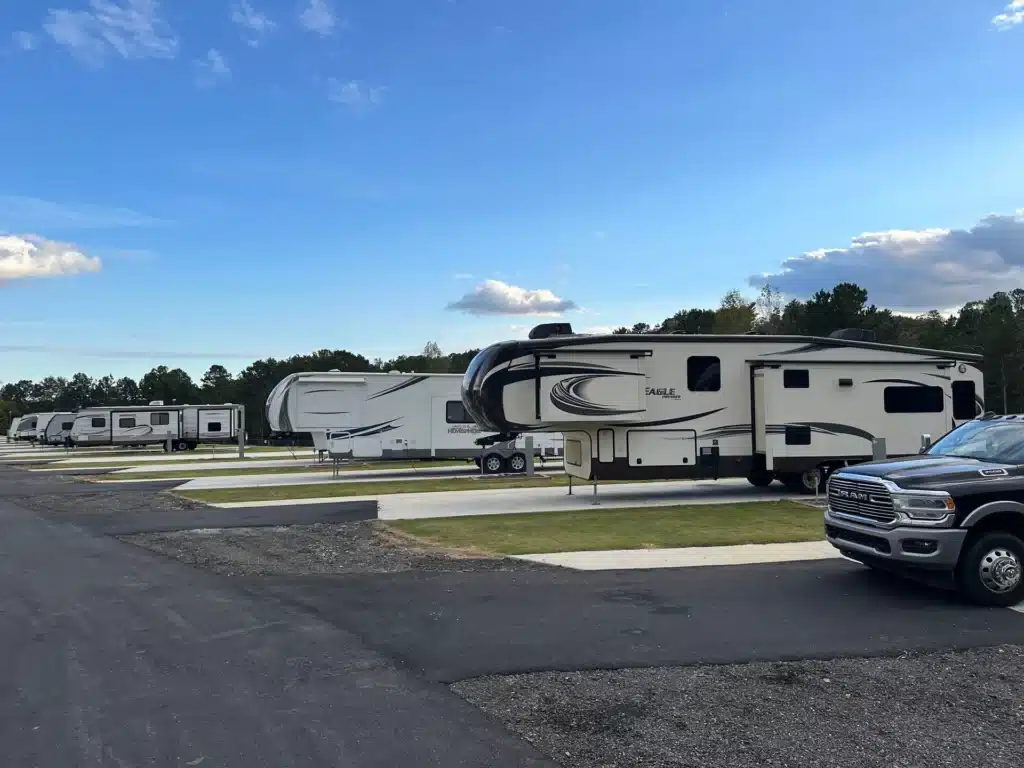
Photo from Apple Country RV Resort
Travelers looking for easier RV setups often prefer campgrounds with reliable amenities, quieter surroundings, and enough comfort to truly slow down after a long drive. Even simple moments like sitting outside the RV at sunset or waking up to cooler morning air can make the trip feel more memorable.
The Hilltop at Brenham
Located in Texas, The Hilltop at Brenham offers a quieter atmosphere that works well for RV travelers wanting comfort without the crowded feel of larger resorts. The peaceful surroundings and slower pace make it easier to unwind after a full day on the road.
Yogi Bear’s Jellystone Park Gulf Coast
Families often enjoy parks like Yogi Bear’s Jellystone Park Gulf Coast because they combine full hookup camping with pools, activities, and entertainment for all ages. After busy travel days, having space for kids to play while adults relax around the campsite can make the stay feel much easier.
Sunset Grove RV Park
For travelers looking for a more practical overnight setup, Sunset Grove RV Park offers convenient RV accommodations that work well between longer driving routes. Quiet evenings and a simple setup often become some of the most appreciated parts of RV travel.
Apple Country RV Resort
Mountain scenery adds a different atmosphere to RV trips, and Apple Country RV Resort gives travelers access to a more peaceful outdoor setting while still providing full hookups and modern campground comforts. Slower mornings surrounded by trees and cooler mountain air create the kind of experience many RVers look for.
Dells River Bay RV Resort
Travelers visiting Wisconsin Dells often look for campgrounds that balance outdoor access with convenience. Water views, nearby attractions, and easier RV setups help make stays at Dells River Bay RV Resort feel both relaxing and practical for longer trips.
Walnut Hills Campground
A more traditional outdoor atmosphere is part of what makes Walnut Hills Campground appealing for RV travelers. Campfires, wooded surroundings, and quieter evenings create a comfortable setting for travelers who still want nature while enjoying the convenience of hookups.
Yadkin Valley RV Resort
Located in North Carolina wine country, Yadkin Valley RV Resort offers scenic surroundings with modern RV amenities that make longer stays feel more comfortable. Sitting outside after sunset or enjoying slower mornings near the campground often becomes part of the experience itself.
How to Choose an RV Campground for Your Travel Style
Learning how to choose an RV campground depends heavily on what kind of trip you want.
Travelers who value convenience, showers, Wi-Fi, and easier setup often prefer full hookup campgrounds. Those looking for solitude, quiet nights, and remote scenery may enjoy dry camping more.
The best option sometimes changes depending on the trip itself. Longer stays often feel easier with hookups, while shorter scenic stops may work well for dry camping.
Travelers comparing options can also choose a campground that fits your travel style before booking.
For travelers still deciding between resort-style parks and more traditional campgrounds, understanding the difference between RV resorts vs campgrounds can also help narrow down the best fit.
What to Know Before Booking an RV Site
Understanding what to know before booking an RV site can prevent a lot of unnecessary stress during your trip.
Before booking, check:
- hookup availability
- RV size restrictions
- pull-through or back-in site types
- generator rules
- water access
- campground amenities
- distance between sites
A little research ahead of time often makes the experience much smoother once you arrive.
Travelers wanting to compare more destinations can also browse and find campgrounds and RV parks near you for additional options.
FAQs
What is the difference between full hookup and dry camping?
The biggest difference between full hookup vs dry camping is utility access. Full hookup sites include water, electricity, and sewer connections, while dry camping sites do not provide those hookups.
Do I need full hookups at a campground?
Not always. Travelers staying longer or wanting more convenience often prefer full hookups, while shorter trips may work well without them.
How long can you dry camp in an RV?
The length of dry camping depends on water supply, battery usage, waste tank capacity, and power management.
Which RV site type is best for beginners?
Many beginners prefer full hookup RV sites because they simplify the overall camping experience and reduce setup concerns.
Find the Right RV Camping Style with BlueSpot Guide
Understanding full hookup vs dry camping helps travelers choose RV stays that match their comfort level, travel goals, and preferred pace.
BlueSpot Guide helps RV travelers discover campgrounds, RV resorts, scenic routes, and outdoor stays that fit different travel styles, whether you prefer full-service campground amenities or quieter off-grid experiences.
Campgrounds, RV resorts, and local businesses can also partner with BlueSpot Guide to connect with travelers searching for places to stay, nearby attractions, and RV travel ideas.